
The Goliad Massacre was a pivotal and tragic event during the Texas Revolution, occurring on March 27, 1836, when Mexican forces executed hundreds of Texian prisoners of war. This mass execution took place at Presidio La Bahía near Goliad, Texas, under orders from Mexican President General Antonio López de Santa Anna, and it became a rallying cry for Texian forces alongside the fall of the Alamo.
Background and Lead-Up
In early 1836, as the Texas Revolution intensified, Texian Colonel James W. Fannin was commanding forces at Goliad. Following the Battle of Refugio and the subsequent Battle of Coleto Creek (March 19–20, 1836), Fannin and approximately 400 of his men were surrounded and forced to surrender to Mexican General José de Urrea. Urrea had promised humane treatment and prisoner-of-war status, but Santa Anna overruled this, deeming the Texians as pirates rather than legitimate combatants due to their rebellion against Mexico. The prisoners, including survivors from other skirmishes, were marched back to Goliad and held at the presidio.
Earlier actions by Texian forces, such as those led by Captain Amon B. King—who burned local ranches and executed Mexican civilians—had escalated tensions and contributed to the harsh response from Mexican troops.
The Execution
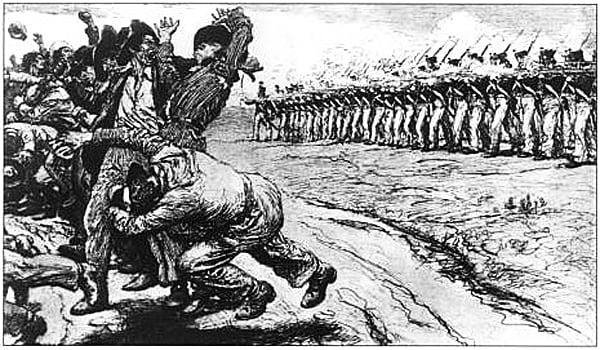
On Palm Sunday, March 27, 1836, the prisoners were divided into groups and marched out of the fort under the pretense of being released or relocated. Instead, they were halted in open fields and executed by firing squads. Estimates of the death toll vary slightly, but most sources report around 342 to 445 Texians killed, making it one of the largest losses for the Texian side in the revolution—nearly twice the number killed at the Alamo. Fannin himself was executed last, after watching his men die; he reportedly requested a Christian burial and not to be shot in the face, requests that were partially ignored.
A small number survived: about 28 men escaped during the chaos, and others—such as doctors, interpreters, and craftsmen—were spared for their skills. The bodies were burned in mass pyres, leaving a gruesome scene that shocked survivors and witnesses.
Aftermath and Significance
News of the massacre spread quickly, fueling outrage among Texians and boosting recruitment for Sam Houston's army. The cries of "Remember the Alamo! Remember Goliad!" became motivational slogans leading up to the decisive Battle of San Jacinto on April 21, 1836, where Texian forces defeated Santa Anna and secured independence. The event highlighted the brutality of the conflict and Santa Anna's "no quarter" policy toward rebels.
Today, the site at Presidio La Bahía is a historical landmark, with memorials honoring the victims. It serves as a reminder of the Texas Revolution's human cost and is often discussed in the context of other key events like the Goliad Declaration of Independence (December 1835), which preceded the massacre and symbolized early calls for Texas sovereignty.
More reading is found on sources sources like the Texas State Historical Association provide primary accounts and further context on the individuals involved.